Recognised by Tamil Nadu Nurses and Midwives Council | Affiliated to The Tamil Nadu Dr. MGR Medical University
Equipping future nurses with hands-on clinical skills through our advanced, fully-equipped laboratories — designed to bridge the gap between classroom knowledge and real-world practice.


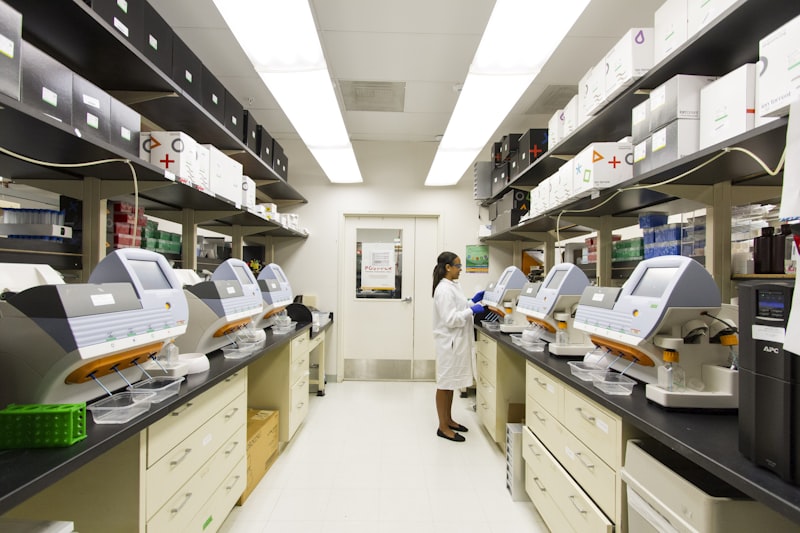
Our Clinical Laboratory complex spans over 8,000 sq. ft., housing twelve specialised laboratories equipped with the latest nursing and medical equipment. Students practice on realistic manikins, task trainers, and authentic hospital-grade instruments in a controlled, safe environment before stepping into actual clinical settings.
Every lab is maintained to the standards set by the Tamil Nadu Nurses and Midwives Council (TNMC) and The Tamil Nadu Dr. MGR Medical University, ensuring our graduates are confident, competent, and ready for the challenges of modern healthcare.
All laboratories are inspected and approved by the Tamil Nadu Nurses and Midwives Council and comply with the Indian Nursing Council (INC) guidelines for nursing education.
Each laboratory is purpose-built to simulate clinical environments, enabling students to develop mastery before entering the wards.

Our flagship 2,400 sq. ft. lab simulates a complete hospital ward with 20 beds, nursing stations, medication trolleys, and a full range of diagnostic equipment. Students master foundational nursing procedures including bed-making, patient hygiene, vital signs monitoring, and wound care in a realistic ward environment.

Equipped with 3D anatomical models, skeleton replicas, cross-sectional charts, and digital interactive boards to visualise human body systems. Microscopes and histology slides enable cellular-level study.

A Biosafety Level 2 laboratory with laminar flow hoods, autoclaves, incubators, and centrifuges. Students learn culture techniques, gram staining, and infection-control protocols critical to clinical nursing practice.

Features full-term maternity manikins, newborn care simulators, and birthing simulation equipment. Students practise antenatal and postnatal care, delivery support, and neonatal assessment procedures.

Dedicated paediatric ward setup with infant beds, neonatal care equipment, and child-sized manikins. Covers child immunisation, paediatric medication dosing, and growth monitoring procedures.

Simulates a Primary Health Centre with maternal and child health corners, immunisation station, and health education materials. Prepares students for outreach and rural healthcare delivery.
A uniquely designed calming space equipped with counselling room setups, therapeutic activity materials, and role-play simulation tools. Students practise therapeutic communication, crisis intervention, and psychiatric assessment skills in a structured, empathetic environment.


Equipped with food models, nutritional charts, anthropometric tools, and dietary planning software. Students learn clinical nutrition assessment, therapeutic diet planning, and patient counselling skills.
High-fidelity simulation environment featuring crash carts, defibrillators, ventilators, and cardiac monitors. Students train in BLS, ACLS scenarios, central line care, and critical care nursing protocols.
Every piece of equipment mirrors what students will encounter in real clinical settings — ensuring zero adjustment time when they enter the workforce.


By the time our students graduate, they have clocked hundreds of hours of hands-on clinical practice across all specialisations.
Master 80+ clinical nursing procedures including IV cannulation, urinary catheterisation, nasogastric tube insertion, wound dressing, and medication administration using correct technique and aseptic principles.
Develop sound clinical judgement through scenario-based simulations, case studies, and high-fidelity patient care exercises that mirror real emergency and ward situations.
Internalise a rigorous patient safety mindset through infection control training, medication verification protocols, documentation practices, and error-prevention strategies.
Gain confidence operating modern medical devices — multi-parameter monitors, infusion pumps, ventilators, defibrillators, and electronic health record (EHR) systems.
Practise inter-professional collaboration through team-based simulation scenarios, code-blue drills, and handover communication training modelled on SBAR methodology.
Build specialty competencies in maternal-child health, paediatric care, psychiatric nursing, community health outreach, and critical care through dedicated lab rotations.

Book a campus visit and get a guided tour of all twelve clinical laboratories. See our equipment, meet our faculty, and understand why Sengunthar Nursing College produces clinical-ready graduates.